






Kelsey O’Berry | 04/29/2026
Digital Identity Deployment for Education: What Institutions Need to Know
Speak With An Expert

Solutions
Main menu
Discover the most durable, secure logical access control systems. rf IDEAS is backed by engineering and technical support to address any authentication need.
Industries
Main menu
Discover industry-specific digital access control systems, from healthcare to education, for your security-critical business needs.
Products
Main menu
WAVE ID® card readers are contactless access control solutions from rf IDEAS, the creators of pcProx card readers. Learn all about our RFID readers here.
Credentials
Main menu
Supporting the widest range of access control credentials and authentication credentials worldwide, rf IDEAS enables quick access and simplified authentication for organizations across the world.
Partners
Main menu
As a member of the ENGAGE Partner Program, it’s simple to get the answers you need and the marketing materials and technical information that help build customer relationships.
Support
Main menu
Get all the support you need to be successful. Our support center provides product manuals, firmware and application downloads, software conversion tools, answers to frequently asked questions, and access to live technical and sales support
About us
Main menu
rf IDEAS manufactures authentication solutions designed to simplify complex security problems and workflows across multiple industries.
Solutions
Main menu
Discover the most durable, secure logical access control systems. rf IDEAS is backed by engineering and technical support to address any authentication need.
Industries
Main menu
Discover industry-specific digital access control systems, from healthcare to education, for your security-critical business needs.
Products
Main menu
WAVE ID® card readers are contactless access control solutions from rf IDEAS, the creators of pcProx card readers. Learn all about our RFID readers here.
Credentials
Main menu
Supporting the widest range of access control credentials and authentication credentials worldwide, rf IDEAS enables quick access and simplified authentication for organizations across the world.
Partners
Main menu
As a member of the ENGAGE Partner Program, it’s simple to get the answers you need and the marketing materials and technical information that help build customer relationships.
Support
Main menu
Get all the support you need to be successful. Our support center provides product manuals, firmware and application downloads, software conversion tools, answers to frequently asked questions, and access to live technical and sales support
About us
Main menu
rf IDEAS manufactures authentication solutions designed to simplify complex security problems and workflows across multiple industries.
Educational institutions are rethinking how identity works across campus. Students increasingly expect to access services, facilities and credentials with a tap of their smartphone. Recent research shows that 45% of students say they would prefer a mobile ID, underscoring how quickly digital-first experiences have become the norm.¹
At the same time, campus environments remain operationally complex. Faculty and staff rely on secure access to shared workstations, research labs, health centers and administrative systems. IT and security teams must manage high-turnover populations, role-based access privileges and evolving compliance requirements, often while supporting aging proximity technologies and password-heavy authentication models.
These legacy systems can introduce real risk, from credential cloning and unauthorized access to weak password practices and limited visibility into how access is granted and revoked. As expectations shift and threats increase, institutions are reassessing how credentials are issued, authenticated and managed across both physical and digital environments.
That reassessment is driving increased interest in deploying digital ID wallets in education as part of a broader effort to modernize campus identity infrastructure without compromising security, compliance or equity.
The demand for mobile is clear, but successful deployment depends on careful planning. As you evaluate deploying digital ID wallets in education, several operational and regulatory considerations come into focus.
Digital identity systems must protect student data throughout the entire credential lifecycle—from issuance to revocation. Mobile credentials should rely on encrypted transmission, limit unnecessary data exposure and align with FERPA requirements and institutional governance standards.
Institutions should evaluate how identity data is stored, processed and authenticated to ensure that mobile access expands convenience without introducing new privacy risks.
Campuses that include health centers, counseling services or advanced research labs face heightened security and compliance requirements. Authentication workflows must safeguard clinical and research systems while supporting fast, reliable access for staff.
Digital credentials should enable role-based, encrypted authentication that supports HIPAA compliance and audit readiness without slowing down patient-facing or research-critical workflows.
Not every population on campus needs to move to mobile credentials at the same time. Many institutions use a hybrid credential model to support a phased migration—starting with key student or staff groups and expanding gradually as systems, policies and infrastructure mature.
By supporting both mobile credentials and physical smart cards, institutions can pilot digital ID wallets in high-impact environments, validate security and operational workflows, and then extend access to additional groups and access points across campus.
Many campuses continue to rely on legacy proximity technologies that were never designed to support encrypted smart cards or mobile credentials. Existing readers may need to be upgraded or replaced to enable secure digital ID workflows.
Deploying digital ID wallets in education requires a clear assessment of whether physical access control infrastructure can support modern encryption and authentication standards.
Educational institutions manage a wide range of identities—including students, faculty, staff, contractors, alumni and visitors—each with distinct access needs and lifecycle events.
A digital wallet strategy must integrate cleanly with identity and access management systems to ensure access policies remain accurate, consistent and enforceable across campus.
Addressing these considerations early positions your deployment to strengthen security while supporting long-term campus modernization.
When infrastructure and governance frameworks are in place, digital identity wallets can drive measurable improvements across your campus facilities.
You can expect:
Stronger credential protection
Encrypted smart credentials reduce the risk of cloning and duplication while supporting zero trust security strategies that require verified identity at every access point.
Unified physical and logical access
By connecting door access, workstation login and application authentication, you create a more cohesive identity framework with greater visibility and control.
Streamlined credential lifecycle management
As students enroll, transfer, graduate or leave the institution, access privileges can be updated centrally without reissuing physical cards, reducing administrative overhead while maintaining accurate access enforcement.
Improved user experience
Mobile wallet credentials align with how students already interact with technology. Storing a campus ID alongside payments or transit passes creates familiarity, while faculty and staff benefit from faster, more consistent authentication in shared environments.
Deploying digital ID wallets in education delivers the greatest value when security, compliance and usability are addressed together, not in isolation.
With planning in place and infrastructure evaluated, the next step is activating digital credentials in high-impact campus environments. Targeted deployment scenarios allow you to demonstrate measurable security and operational gains while building momentum for broader adoption.
Residence halls and campus facilities
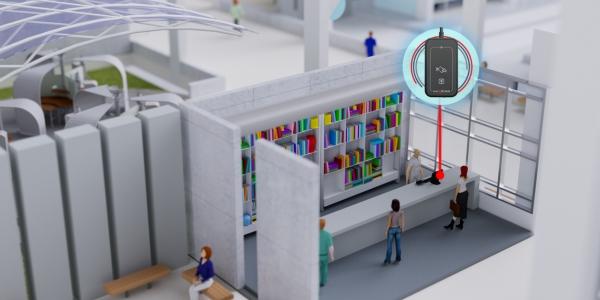
Mobile credentials can be provisioned directly to student devices and used for encrypted access to residence halls, classrooms, labs, libraries and athletic facilities. Permissions can be updated centrally as housing assignments or academic roles change, eliminating the need to reissue physical cards.
Institutions gain better audit visibility into facility access while reducing disruptions caused by lost, shared or cloned badges.
Secure workstation login
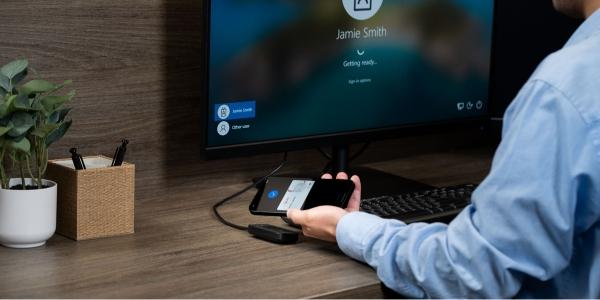
In computer labs, faculty offices and administrative departments, digital credentials enable tap-and-go authentication at shared devices. By integrating with single sign-on and multi-factor authentication platforms, you can streamline login workflows while maintaining strong identity verification.
Sessions can be securely initiated and terminated with a tap, helping reduce password fatigue and minimize the risk of unattended or improperly logged-out devices.
Campus healthcare authentication
If your institution operates a health center, digital credentials can be used to authenticate clinicians and staff accessing EHR systems and other sensitive applications. Mobile-based authentication supports secure, encrypted login while maintaining fast workflows in patient-facing environments.
Access privileges can be role-based and centrally managed to support HIPAA compliance and audit requirements.
Secure print release
Digital credentials can integrate directly into secure print workflows, requiring students and staff to authenticate at the device before documents are released. This reduces unauthorized access to sensitive materials while improving accountability across shared printing environments.
Print activity can be tied to verified user identities, strengthening oversight and compliance reporting.
Visitor and event management
Digital wallets can support modern visitor management processes by enabling temporary mobile credentials for guest lecturers, contractors or event attendees. These credentials can be issued quickly, tracked centrally and revoked immediately after use.
This approach strengthens short-term access control, reduces reliance on manually issued badges and maintains visibility across campus access activity.
Digital ID wallet deployment in education depends on secure reader infrastructure, encrypted credential support and authentication systems that can consistently enforce access policies across campus environments.
rf IDEAS provides credential reader solutions that support secure smart cards and mobile credentials, helping educational institutions extend encrypted authentication across residence halls, shared workstations, healthcare environments, secure print workflows and visitor management systems.
Contact us to learn how rf IDEAS can support your digital identity deployment strategy.
Please note: The information you provide in this form will help us direct you to the appropriate partner who can best fulfill your request.
