






Kelsey O’Berry | 07/15/2026
Deploying Mobile Credentials to Create Connected Campuses
Speak With An Expert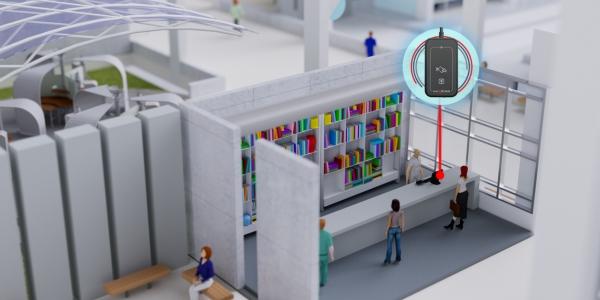

Solutions
Main menu
Discover the most durable, secure logical access control systems. rf IDEAS is backed by engineering and technical support to address any authentication need.
Industries
Main menu
Discover industry-specific digital access control systems, from healthcare to education, for your security-critical business needs.
Products
Main menu
WAVE ID® card readers are contactless access control solutions from rf IDEAS, the creators of pcProx card readers. Learn all about our RFID readers here.
Credentials
Main menu
Supporting the widest range of access control credentials and authentication credentials worldwide, rf IDEAS enables quick access and simplified authentication for organizations across the world.
Partners
Main menu
As a member of the ENGAGE Partner Program, it’s simple to get the answers you need and the marketing materials and technical information that help build customer relationships.
Support
Main menu
Get all the support you need to be successful. Our support center provides product manuals, firmware and application downloads, software conversion tools, answers to frequently asked questions, and access to live technical and sales support
About us
Main menu
rf IDEAS manufactures authentication solutions designed to simplify complex security problems and workflows across multiple industries.
Solutions
Main menu
Discover the most durable, secure logical access control systems. rf IDEAS is backed by engineering and technical support to address any authentication need.
Industries
Main menu
Discover industry-specific digital access control systems, from healthcare to education, for your security-critical business needs.
Products
Main menu
WAVE ID® card readers are contactless access control solutions from rf IDEAS, the creators of pcProx card readers. Learn all about our RFID readers here.
Credentials
Main menu
Supporting the widest range of access control credentials and authentication credentials worldwide, rf IDEAS enables quick access and simplified authentication for organizations across the world.
Partners
Main menu
As a member of the ENGAGE Partner Program, it’s simple to get the answers you need and the marketing materials and technical information that help build customer relationships.
Support
Main menu
Get all the support you need to be successful. Our support center provides product manuals, firmware and application downloads, software conversion tools, answers to frequently asked questions, and access to live technical and sales support
About us
Main menu
rf IDEAS manufactures authentication solutions designed to simplify complex security problems and workflows across multiple industries.
Student IDs have long been a cornerstone of campus life. A single card opens residence halls, unlocks dining facilities, checks out library books and gets students through the door at recreation centers and campus events.
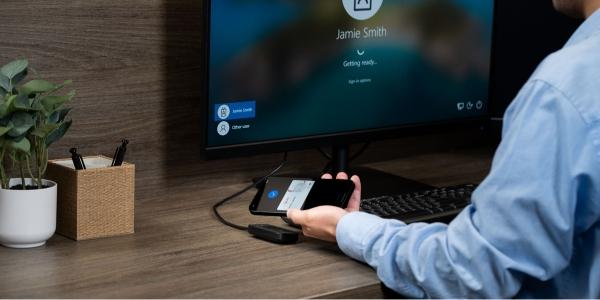
Today, that credential is shifting away from legacy physical badges toward mobile credentials, supported by Universal Wallet compatible readers that work across Apple Wallet, Google Wallet and other mobile wallet platforms. The shift makes sense. Students already rely on their phones for payments, transportation and nearly everything else, so a mobile student ID fits naturally into how they already move through the day.
Much of this momentum comes directly from students. As mobile-first expectations grow, student demand is often the driving force behind an institution’s decision to move forward with mobile credentials, pushing colleges and universities to support that shift consistently across the entire campus rather than in a single building or department.
But moving a student ID into a mobile wallet doesn’t automatically create a better campus experience. To get real value from mobile credential deployment, institutions need to think beyond the credential itself and consider how it supports access across the broader campus ecosystem.
Mobile credentialing helps institutions modernize access control while creating more convenient experiences for students, faculty and staff.
Student preferences are also shifting toward digital credentials. According to a 2025 report from TouchNet, 45% of students say they prefer a mobile ID, highlighting growing demand for more flexible and convenient ways to access campus services.1
Benefits of mobile credentials include:
Just as importantly, mobile credentials support a more connected campus experience. When access works consistently across campus services, students and staff move through their day without interruptions or workarounds.
Deploying mobile credentials across campus requires more than enabling student IDs in a mobile wallet. A successful deployment needs a strategy that balances user experience, interoperability and phased modernization.
Many mobile credential deployments begin with core access use cases, such as residence halls and academic buildings. Those environments matter, but they’re only part of the campus experience.
Students interact with recreation centers, athletic facilities, libraries, dining services, event spaces and a growing number of digital applications throughout the day. If mobile credentials only work in select locations, users may still encounter the same fragmented experiences institutions are trying to eliminate.
Creating a connected campus experience means extending mobile credentials across the environments students and staff use most frequently. The more consistently access works, the more naturally mobile credentials become part of everyday campus life.
Your campus access environment will continue to evolve as new credential technologies, mobile wallets and applications emerge. Supporting that evolution starts with making sure your systems can work together.
Many institutions already manage a mix of platforms across housing, recreation, dining and administrative services. When those systems operate independently, expanding mobile credential use becomes more complex than it needs to be.
An interoperable approach helps institutions support multiple credential types, wallets and systems while extending the value of existing infrastructure. It also simplifies modernization by reducing the need for separate credentialing strategies across campus.
Few institutions can replace every credential, reader and access point at once. In most cases, mobile credential adoption happens gradually as new technologies, budgets and campus priorities align.
A phased approach helps institutions introduce mobile credentials without disrupting existing workflows or requiring large-scale infrastructure changes. Supporting both current and emerging credential technologies also builds in flexibility as adoption grows across campus.
By planning for gradual expansion, institutions can modernize access at a pace that fits their needs while continuing to support the students, faculty and staff who rely on existing systems.
Mobile credential deployment shapes how students, faculty and staff interact with campus services every day. When systems can accommodate multiple credentials, wallets and use cases, everyday touchpoints connect without creating new complexity for users.
rf IDEAS helps educational institutions create more connected campus experiences through interoperable authentication solutions that support mobile credentials, existing credential technologies and evolving access needs.
This flexibility helps institutions modernize at their own pace while extending mobile access across campus services and environments.
Contact us to learn how our WAVE ID® solutions can help you enable secure, flexible mobile credential deployment across campus.
Please note: The information you provide in this form will help us direct you to the appropriate partner who can best fulfill your request.
